

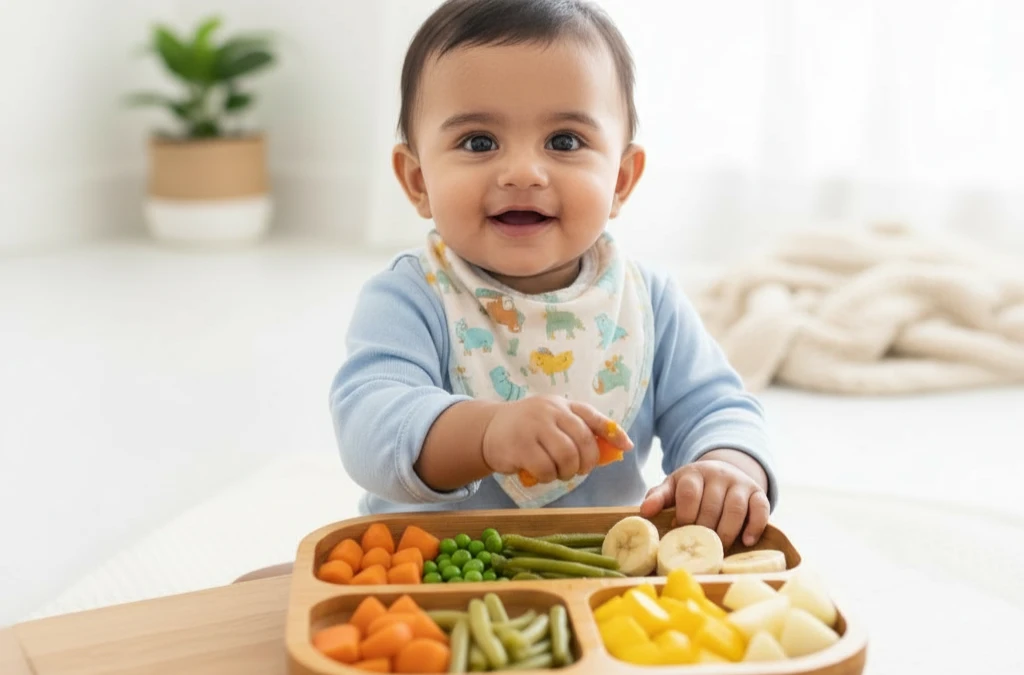
As your baby grows, their body needs more than just calories — it needs vitamins and minerals, the tiny nutrients that play a big role in growth, immunity, and overall development. Unlike carbohydrates or fats, vitamins don’t provide energy, but they act like little helpers, making sure every part of your baby’s body works the way it should.
👉 Among these, two vitamins deserve special attention: Vitamin A and Vitamin C.
The Role of Vitamin A
Think of Vitamin A as the growth and protection vitamin. A steady intake helps your child’s body fight off infections while also supporting overall growth and development.
Babies who don’t get enough Vitamin A may be more prone to frequent infections or vision-related issues, which is why it’s important to include it early in their diet.
The Role of Vitamin C
If Vitamin A is the protector, Vitamin C is the helper and healer.
Since the body doesn’t store Vitamin C, babies need regular sources in their daily diet.
Major Food Sources for babies
Vitamin A Sources
Vitamin C sources
👉 Animal foods usually do not provide Vitamin C, which is why fruits and vegetables are the most important sources for babies.
Why Fruits and vegetables
For infants just starting solids, fruits and vegetables are the safest and most accessible way to provide vitamins. They are:
Animal sources like eggs and dairy can be a source of Vitamin A in a baby’s diet later (Cow’s milk is not recommended for children under 1 year), but for the very first stages, fruits and vegetables remain the best way to cover essential Vitamin A and C needs.
A Parent’s Takeaway
Think of vitamins as your baby’s invisible support system. They don’t just keep illness away — they help your child see better, heal faster, and grow stronger every day.
Babies get these vitamins naturally from wholesome foods like fruits and vegetables. However, because many vitamins are not stored in the body for long, they must be replenished regularly through daily meals. Vitamin C is water-soluble, meaning any excess is flushed out, while Vitamin A is fat-soluble and stored in small amounts but still needs a steady supply.
✨ At Pulpins, we make it easier for parents to provide these vital nutrients through carefully crafted recipes. Our ingredients — like Mango, Sweet Potato, Carrot, Pumpkin, etc. — are naturally rich in Vitamins. Including a dash of Lemon juice in every recipe not only enhances flavour but also boosts vitamin C intake naturally, complementing the vitamins that might have been diminished during cooking.
Every baby food pouch is packed with fruits and vegetables, free from added sugar or preservatives, and designed to make mealtimes both easy and nourishing.