

Discover why beetroot is a nutritious addition to your baby's diet. Learn its benefits, feeding tips, and easy puree ideas for babies aged 6 months and above.
As parents, we're always looking for nutritious foods that support our baby's healthy growth and development. While fruits like apples and bananas often get the spotlight, beetroot is a vibrant vegetable that deserves a place on your baby's plate.
Known for its deep red color and naturally sweet taste, beetroot is packed with essential nutrients that can benefit babies from the start of their solid food journey. If you're exploring healthy options for your little one, here's everything you need to know about introducing beetroot to babies.
Yes! Beetroot can be introduced to babies once they are ready for solids, typically around 6 months of age. Its soft texture after cooking makes it easy to blend into smooth baby food purees, while its mild sweetness is often well accepted by babies.
Whether served as a homemade puree or included in carefully prepared natural baby food pouches, beetroot can be a nutritious addition to your baby's diet.
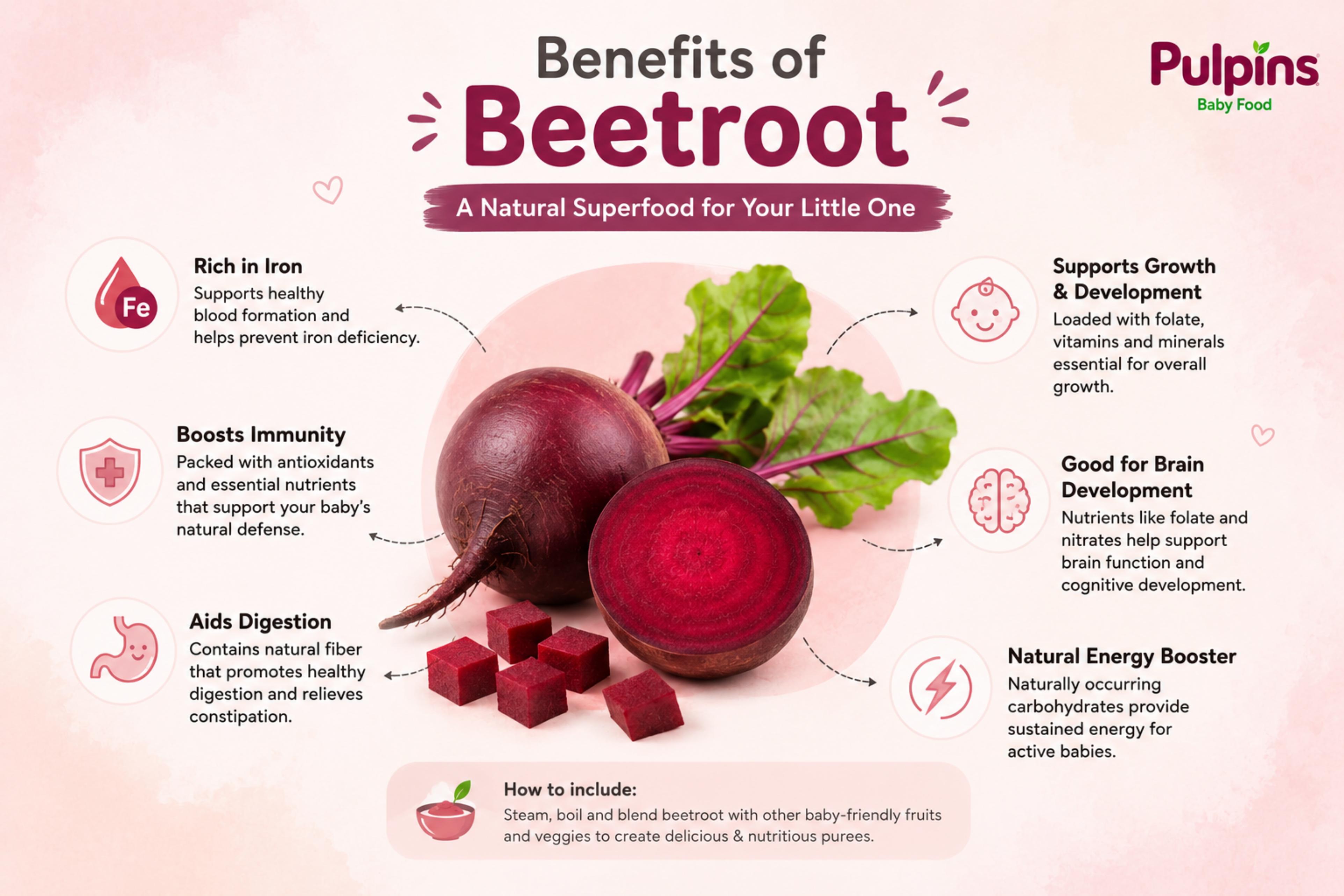
Beetroot is often associated with iron-rich nutrition. While it is not the highest source of iron, it contains nutrients that support healthy blood formation and overall growth. Including a variety of vegetables like beetroot can contribute to a balanced diet for growing babies.
Folate is essential for cell growth and development. During infancy, adequate folate intake supports rapid growth and healthy development.
The vibrant color of beetroot comes from powerful antioxidants called betalains. These compounds help protect cells from oxidative stress and support overall wellness.
Beetroot contains dietary fiber that can help support healthy digestion when introduced as part of a varied diet.
Beetroot contains natural carbohydrates that provide energy for active, growing babies without the need for added sugars.
Most pediatric feeding guidelines recommend introducing beetroot after 6 months of age when babies begin consuming solid foods.
Start with a small quantity and observe your baby for any signs of sensitivity. As with any new food, introduce beetroot on its own initially before combining it with other ingredients.
A simple beetroot puree is one of the easiest ways to introduce this nutritious vegetable.
This puree can also be combined with apple, pear, sweet potato, or carrot for additional flavor and nutrition.
A naturally sweet combination that babies often enjoy.
Offers a colorful blend packed with nutrients.
Creates a creamy texture and mild sweetness.
A gentle option for babies exploring new flavors.
These fruit and vegetable baby purees provide variety while helping babies develop a taste for wholesome foods.
Parents seeking convenience may also choose clean label baby food products made with simple ingredients and no unnecessary additives.
When prepared appropriately, beetroot is generally safe for babies. One thing parents may notice is a temporary reddish color in their baby's stool or urine after eating beetroot. This is usually harmless and related to the vegetable's natural pigments.
If you have concerns about introducing new foods, consult your pediatrician.
Whether preparing food at home or selecting ready to eat baby food, look for products made with wholesome ingredients. Parents increasingly prefer preservative-free baby food, no added sugar baby food, and BPA-free baby food pouches that prioritize quality and transparency.
Natural baby food pouches and organic baby food purees can offer convenient options for busy families while supporting healthy eating habits.
Beetroot is a colorful, nutrient-rich vegetable that can be a valuable addition to your baby's diet from 6 months onward. Its natural sweetness, versatility, and nutritional benefits make it an excellent ingredient for baby food purees and healthy meal combinations.
By introducing a variety of vegetables, including beetroot, parents can help build positive eating habits and encourage a lifelong appreciation for nutritious foods. Whether served as a homemade puree or incorporated into carefully selected baby food pouches, beetroot offers a delicious way to support your baby's growing nutritional needs.