

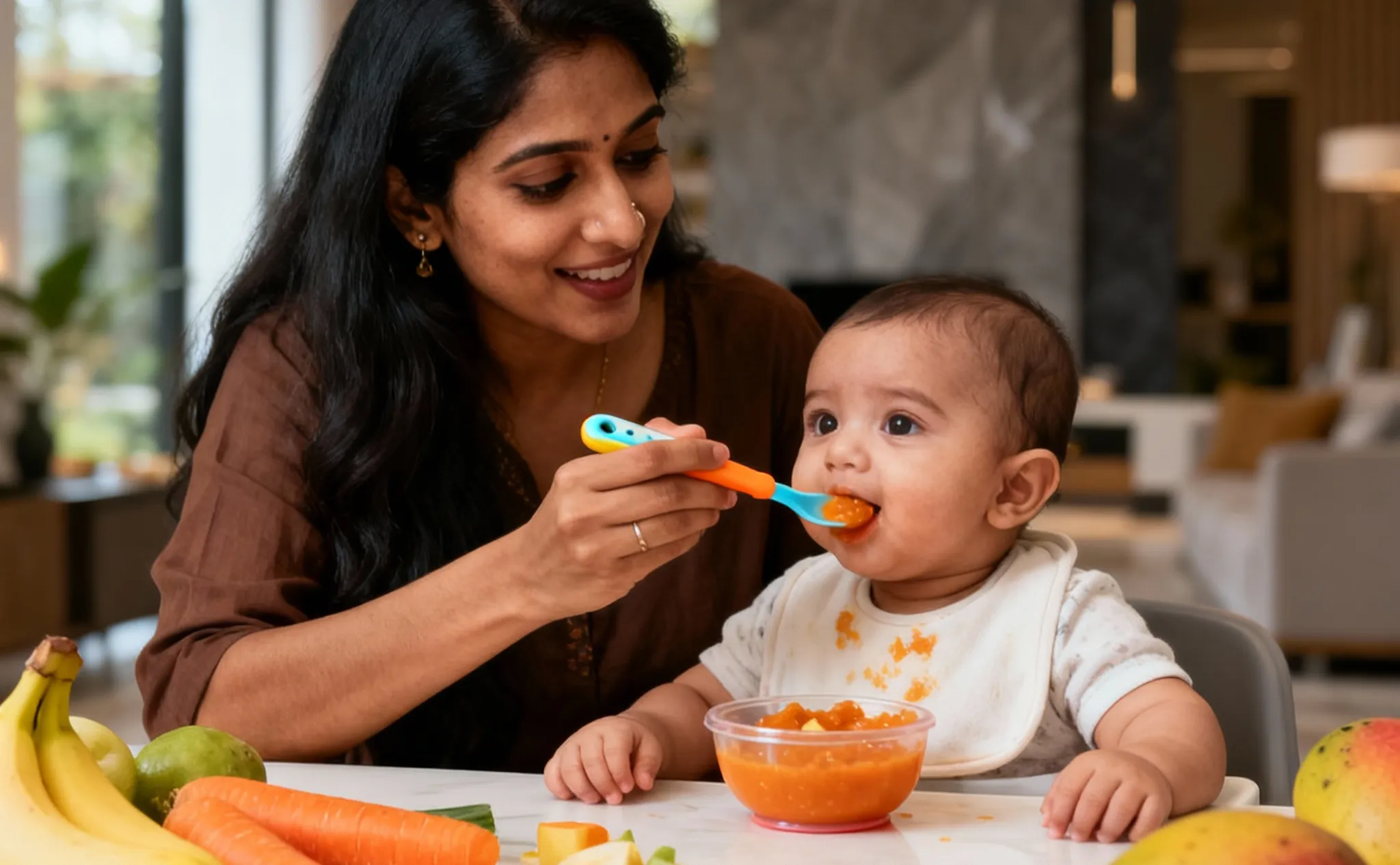
For the first six months of life, breast milk (or formula, if required) is all your baby needs. It provides the perfect balance of nutrition, immunity, and comfort. But at around 6 months, babies reach an exciting milestone — they are ready to start solids!
Starting solids is not just about filling tiny tummies — it’s about helping your baby explore new tastes, textures, and nutrients essential for healthy growth. For new parents, however, this stage can also feel confusing and overwhelming. What foods are safe? How do you know your baby is ready? And what rules should you follow?
This guide breaks down everything you need to know about introducing solids at 6 months.
Why Six Months Matters
The World Health Organization (WHO) and the Indian Academy of Paediatrics recommend introducing solids at six months — not earlier. That’s because a baby’s digestive system is still developing in the early months, and introducing solids too soon may cause tummy troubles or increase infection risks. By six months, babies also start needing additional vitamins and minerals such as iron, zinc, and Vitamin A and C, which breast milk alone cannot fully provide.
Signs Your Baby Is Ready for Solids
Around this age, most babies show signs of readiness. They can usually sit with support, hold their head steady, open their mouths when food is offered, and even try to grab food from your plate.
👉 If your baby isn’t showing these signs, it may be best to wait a few weeks and it is perfectly fine.
The First Foods: What to Start With
When starting solids, the golden rule is to keep things simple and gentle. Begin with single-ingredient pureed foods that are smooth and easy to digest. Many parents start with naturally soft fruits like banana, mango, pear, papaya or cooked apples and cooked vegetables such as pumpkin, carrot, beetroot, or sweet potato.
Introduce only one new food at a time, waiting a few days before offering another. This makes it easier to notice any sensitivities or allergies. In the beginning, just a spoon or two once a day is enough. Gradually, as your baby becomes familiar with the flavours
and textures, the quantity and variety can increase.
👉 Start with 1–2 teaspoons once a day, then gradually increase the quantity and variety.
Golden Rules for Feeding 6–12 Months
A few practices can cause more harm than good.
How to Make Mealtime Easy and Safe
Feeding should always be a relaxed and happy experience. Sit your baby upright, use a clean spoon or bowl, and always supervise during feeding. Start with smooth purees and slowly progress to thicker consistencies as your child grows. Offer small sips of boiled and cooled water after meals.
👉 Remember, each baby is unique. Some may take solids quickly, while others need more time. Go at your baby’s pace and don’t worry if they take a few tries to accept new tastes.
Finding the Right Balance
Homemade foods are a wonderful way to introduce babies to fresh, natural ingredients. At the same time, busy schedules and travel can make it difficult to prepare safe and hygienic meals every day. In such times, ready-to-eat baby food purees made from simple fruits and vegetables can be a convenient and reliable choice — as long as they contain only natural ingredients and free from added sugar, salt, and artificial additives.
✨ At Pulpins, we’re here to make this journey easier. Our baby food purees are made only from real fruits and vegetables, steam-cooked to lock in nutrients, and carefully crafted without added sugar, salt, or preservatives. Each natural baby food pouch is designed to be safe, convenient, and wholesome — giving parents peace of mind and babies a healthy, happy start.
Because the first bites matter the most 💛.